
At Elevate Dental, we know that gum disease often goes unnoticed by our patients. This can sometimes be because there aren’t many obvious symptoms in the early stages. But our team in Vernon wants to help you notice what might be happening and stay ahead of it, so you can feel confident smiling out loud.
Knowing what to look for and how to address it can help you protect your teeth and your health. If you’re due for a visit, regular dental check-ups and cleanings are 1 of the most effective ways to catch gum disease early.
What Gum Disease Actually Is
According to the Canadian Dental Association, gum disease starts with plaque buildup, the sticky film that forms on your teeth and along your gumline every day. When plaque isn’t fully cleared away through brushing and flossing, it hardens and irritates the gum tissue around it. Over time, that irritation can turn into an infection.
There are 2 main stages. The first is gingivitis, the early stage in which the gums are inflamed, but the damage is still reversible. If it’s left untreated, it can progress to periodontitis, a more serious form that affects the bone and the tissues that hold your teeth in place. Because the early stage is often painless, many people don’t realize anything is wrong.
Signs & Symptoms to Watch For
Early Warning Signs
Your gums are trying to tell you something when they don’t look or feel quite right. These are some of the early signs worth paying attention to:
- Red, swollen, or tender gums
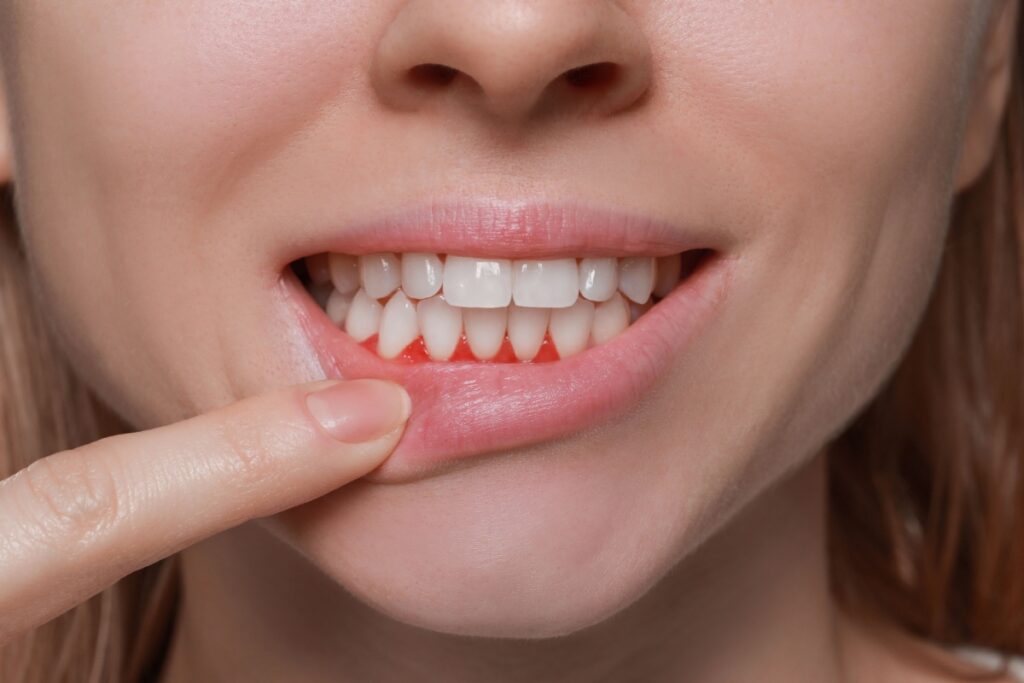
- Bleeding when you brush or floss
- Persistent bad breath that doesn’t go away with brushing
Bleeding gums are among the most common early signs, and they’re very important to pay attention to. Healthy gums typically don’t bleed during regular brushing, so if yours do, it’s worth getting checked out.
Signs It Has Progressed
When gum disease moves into a more advanced stage, the signs become harder to ignore. You might notice:
- Gums that are pulling away from your teeth
- Teeth that feel loose or seem to have shifted
- Tooth sensitivity or discomfort when chewing
At this stage, the infection may have started to damage the bone and tissue that support your teeth. Getting professional care as soon as possible can help slow that damage and protect what’s still healthy.
What Puts You at Higher Risk
Some habits and health factors can make your gums more vulnerable to disease. Smoking, for example, puts you at a much higher risk of gum disease because it weakens gum tissue and can impact the body’s natural healing process. Hormonal changes, like those that happen during pregnancy, can also increase gum sensitivity and make inflammation more likely.
Certain medications can reduce saliva flow, and saliva plays an important role in keeping your mouth clean and balanced. Less saliva may make it easier for bacteria to build up. This is part of why you should always tell your dentist the medications you’re on: It helps our team know to keep a closer eye on your gum health.
How Gum Disease Affects Your Overall Health
The Connection to Serious Health Conditions
Gum disease doesn’t just stay in your mouth. The bacteria involved in gum infections can travel through the bloodstream and have been linked to effects elsewhere in the body. Studies have found associations between gum disease and an increased risk of heart disease, which is a compelling reason to take gum health seriously.
For people managing diabetes, gum disease can make blood sugar levels harder to control. The relationship goes both ways, as high blood sugar can also make gum infections worse. Keeping your gums healthy is part of supporting your overall health, not just your smile.
Why Early Action Matters
Gingivitis, the early stage, is usually reversible with the right care. With consistent brushing, flossing, and a professional cleaning, inflamed gums can return to a healthy state. The window for that kind of recovery closes as the disease progresses.

Advanced gum disease can cause lasting damage to the bone and tissue that hold your teeth in place, and your teeth usually can’t come back from that kind of damage. Catching it early, when treatment is simpler and more effective, makes a real difference in the long run.
How to Prevent & Treat Gum Disease
Your Daily Routine at Home
A consistent routine at home is your first line of defence and a simple way to elevate your smile over time. Major health organizations such as the American Dental Association and the Canadian Dental Association recommend brushing at least twice a day, making sure to clean along the gumline, not just the surfaces of your teeth. Floss every day to clear out the buildup between teeth that your brush can’t reach.
Proper brushing and flossing techniques make a bigger difference than most people realize, and they’re 1 of the simplest ways to protect your gum health over the long term. Using a toothpaste formulated for gum health can also give your routine an added boost.
Professional Care
No matter how thoroughly you brush, you can’t remove hardened plaque (tartar) at home. That’s where regular professional cleanings come in. A dentist in Vernon can remove buildup that accumulates over time and check for early signs of gum disease before they progress to something more serious.
A Deeper Clean
For cases where gum disease has already taken hold, a deeper cleaning called scaling and root planing can help clear bacteria from below the gumline and smooth the root surfaces so gums can reattach. Regular checkups make it much easier to catch and address problems while they’re still manageable.
Schedule Your Cleaning
At Elevate Dental, our team is here to help you protect your gums, support your overall health, and feel confident to smile out loud every day. If it’s been a while since your last visit, or if any of these signs sound familiar, we encourage you to book an appointment.